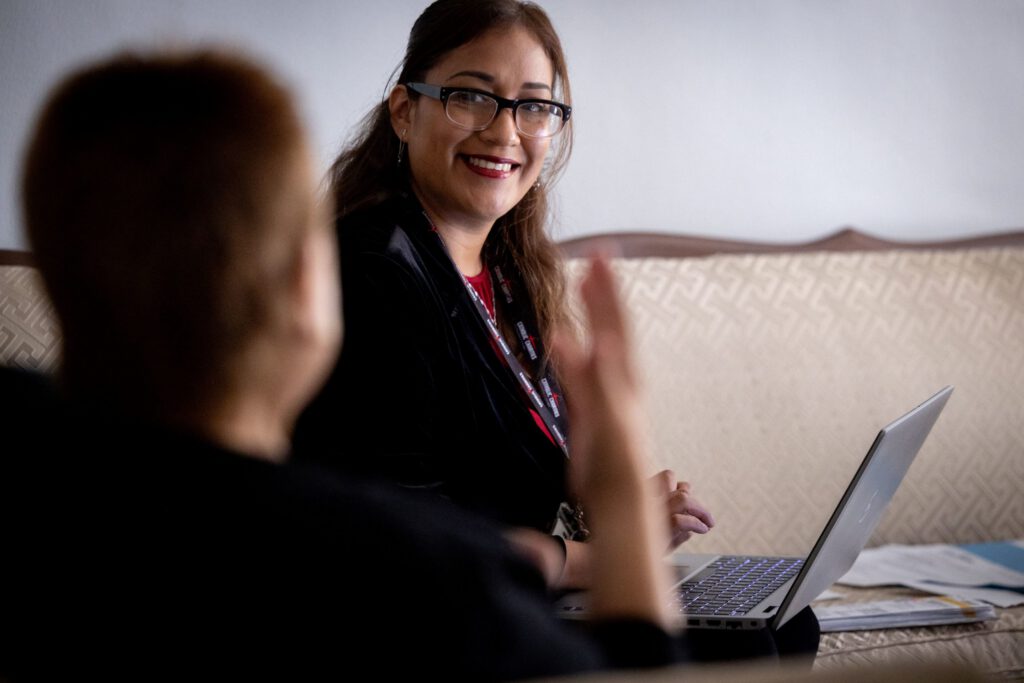

Beatrice and her husband, Jose, have no children or family to rely on as they age. They both face chronic health conditions that make it a challenge to live independently in their southwest Chicago home. Beatrice, 66, takes care of Jose, 75, but needs help with housekeeping, cooking, shopping, lawn maintenance, and snow removal.
They are not alone.
According to the U.S. Census, an estimated 16 million older adults live alone in the United States. An estimated 4 in 10 seniors living alone have vision or hearing loss, cognition issues, physical disabilities, or difficulty caring for themselves or living independently, according to a KFF health policy research analysis of 2022 U.S. Census data.
These seniors are at a higher risk of having accidents, neglecting their health, and their homes. Even worse, a significant majority are living below the federal poverty level and cannot afford to pay for services — or move to assisted living facilities which cost an average of $5,225 a month in Illinois — that could improve their daily living. Many seniors don’t have enough money to pay for rent, buy groceries or essential household items, or even their medications.
As the older population in Illinois continues to grow — the Illinois Department on Aging estimates that seniors will represent 3.6 million people, or 25% of the state’s population in the next five years — so does the need for in-home support.
The Illinois Department on Aging has partnered with Catholic Charities for more than 40 years to bring in-home care coordinators to seniors’ homes in Cook and Lake counties to provide access and deliver in-home services they need, including homemaker services.
“Our goal is to keep seniors in the community as long as we possibly can,” says Meisha Lyons, Catholic Charities Vice President, Seniors Operations.
Empowering seniors to live in the community as long as possible
Catholic Charities’ care coordinators provide compassionate support and meaningful connections that empower 30,000 seniors annually in Cook and Lake counties to continue to live and age with dignity in their homes and their communities.
“Sometimes, the care needs are more than what we can do in the home,” says Lyons.
Once a client contacts Catholic Charities, a care coordinator visits them at home to conduct an initial assessment. The care coordinator asks the seniors if they need assistance with cooking, cleaning, bathing, transferring out of a bed or a sofa, if they need accompaniment to the doctor, and if they can take medication on their own.
Once they determine what level of care the senior needs, care coordinators create an individualized care plan and offer referrals to in-home care providers. Seniors can choose which agency they want their services to come from. They also can have a family member apply to be trained and certified by the Illinois Department on Aging to provide those services.
In-home services may include cooking, cleaning, and shopping. Adult day care services also are available for seniors who can’t be home alone. The care plan can include emergency home response in which the senior wears a pendant or bracelet to alert emergency care. All services are provided through the Illinois Department on Aging’s Medicaid waiver.
Assessing needs, connecting with resources
Whatever circumstances seniors may be facing, Catholic Charities’ care coordinators enter their homes and lives with compassion.
Some seniors struggle with hoarding. Others face neglect — whether they are neglecting their own care or are being neglected by family. Sometimes, seniors are living without heat or lights in their homes. Some seniors are raising grandchildren whose parents may be working or facing other difficulties, like incarceration or substance use issues. Whatever their circumstances, Catholic Charities’ care coordinators listen, assess seniors’ needs, and connect them with appropriate resources.
“She always calls me back.”
Beatrice and Jose turned to Catholic Charities last year. Care Coordinator Supervisor Sophia Ortiz met them in their home, assessed them, and referred them to a caregiver and home maintenance services, which they say have been life-changing.
“I think the program and I made such a difference in the lives of Beatrice and Jose because they are getting older and they are not able to do things on their own as before,” says Sophia. “Jose was used to shoveling the snow, cutting the grass and going grocery shopping. With the homemaker services we provide, they are able to get assistance to complete the tasks for them. This can ease a little stress from other issues that may be burdening them like getting transportation to a specialist or financial burden.”
Beatrice says she is grateful for Sophia’s support, particularly since Sophia speaks Spanish, enabling Beatrice her to better express herself and communicate her needs.
“She is excellent,” Beatrice says in her native Spanish, of Sophia. “She’s very nice, I like the way she treats us, the way she helps us, and that she’s responsible. Whenever I call, she always calls me back.”
Sophia says she feels like she made a positive difference in their lives—and the lives of so many others she works with.
“For Beatrice and Jose, now, being part of the program, they have someone to help them when they are in need as they have no family but themselves. To me, this is what this program is meant to do — help them live comfortably in their home, in their community, as I feel, they age better this way.”
For more information on senior services at Catholic Charities, call (312) 655-7470.