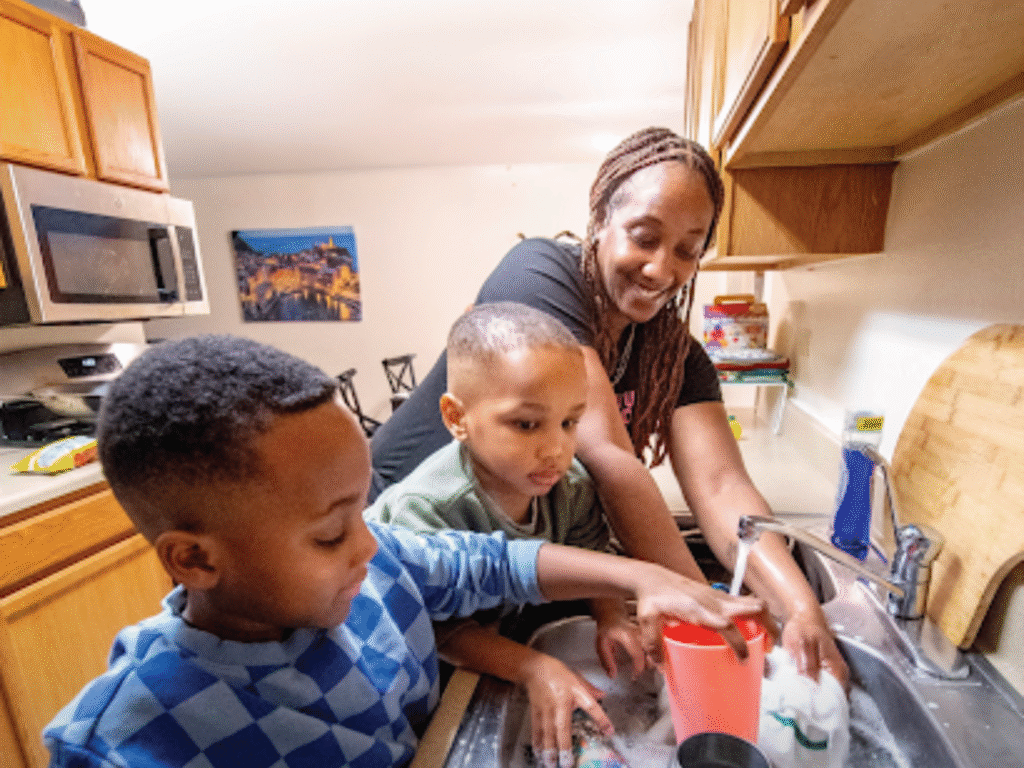

After Kay* fled an unhealthy relationship, she and four of her children, then ages five months to 15 years, moved in with her sister. But the combined family of 11 crammed under one roof was not sustainable. Kay and her children soon found themselves without a home.
On a given night in Illinois, more than 25,000 people like Kay — individuals and families, adults and children — spend the night unhoused. In addition, tens of thousands more are behind on rent, moving frequently, or staying temporarily with friends or family members, without a permanent place of their own.
Homelessness is on the rise in Illinois
In 2024, Illinois homelessness surged 116 percent over the prior year, according to a HUD housing inventory. Chicago accounted for more than 90 percent of that increase.
The number of unhoused Chicagoans quadrupled from 2022 to 2024, according to the Point-in-Time Count, which counts sheltered and unsheltered people on a single night every January. But the problem isn’t only affecting the city. In January 2024, Lake County reported a record number of people who were unhoused: more than 700 living in shelters or on the street, which was fully 50 percent more than the previous year, according to the Lake County Coalition for the Homeless.
To afford an average two-bedroom Chicago apartment, a person must earn $32.96 per hour, more than double the minimum wage.
The primary cause of homelessness in Cook and Lake counties is a shortage of affordable housing, according to the Chicago Coalition to End Homelessness. Low wages, unemployment, lack of access to adequate healthcare, and other issues exacerbate the problem.
How Catholic Charities is helping
Catholic Charities knows housing is a critical first step to achieving long-term stability and self-sufficiency. Every year its New Hope Apartments program connects more than 1,200 people with housing and supportive services to guide their successful transition into permanent housing.
New Hope Apartment’s mission is to motivate, encourage, and provide resources to participants as they transition to and, ultimately, maintain permanent housing in the community on their own.
With the pressure of housing alleviated, New Hope participants can focus on their health, gain new skills, finish a degree, save money, become self-sufficient, and live fulfilling, empowered lives.
A path toward self-sufficiency
Many New Hope participants are families. Catholic Charities cultivates relationships with more than 50 landlords and pays rent for two years. The goal is that the family can remain in their apartment until they complete the program, and then beyond, if possible.
Eighty-five percent of those who complete the New Hope Apartments program increase their income and can sustain permanent housing independently.
In Kay’s case, she received counseling, rental assistance, access to a food pantry, diapers, and support to become a licensed practical nurse. With a stable job, she is rebuilding her credit, has been able to save, and is working toward a bachelor’s degree in nursing.
Participant-driven goals
New Hope apartments are located across Chicago and its suburbs. The city and county shelter systems refer people to the program.
“Regardless of where participants live or how they are referred to us, they come through ‘one door’ so everyone has equal access to services,” says Deloise Crosby, New Hope Director in the southwest suburbs.
Participants choose the neighborhood they’d like to live in — an important step toward their long-term success, says Sharon Love, New Hope Senior Director. “This is a true partnership. We set goals with participants, not for them,” says Love.
Upon finding an apartment, families are connected with resources, many under the Catholic Charities umbrella. Partners like the Chicago Furniture Bank and Digs for Dignity help with furnishings.
“New Hope is transforming lives and has been doing so for decades. The generosity of our supporters makes it possible for this program to continue.” — Millicent Ntiamoah, Associate Vice President, Housing Stability
Participants meet regularly with their case managers to learn about budgeting and saving, work on resumes, search for jobs and prep for interviews, and review their rights as tenants. After completing the program, participants are eligible for six additional months of support. The road to self-sufficiency “takes patience and commitment,” says Tracey Blackburn, New Hope Director for the northwest suburbs. “It’s beautiful to witness when things click, paths open up, and progress suddenly is easier.”
Transforming homelessness to hope is not easy, but New Hope participants earn success on their own terms. Brianna, a 25-year-old single mom and New Hope participant, earned her GED, is getting her certified nursing assistant license, and is looking forward to her daughter’s preschool graduation.
“I went through whatever in life I had to go through so my child doesn’t have to go through it,” she says. “God chose me, and it’s OK, because I won. I made it. It’s only going to be greater from here.”
*Kay’s name changed for privacy